
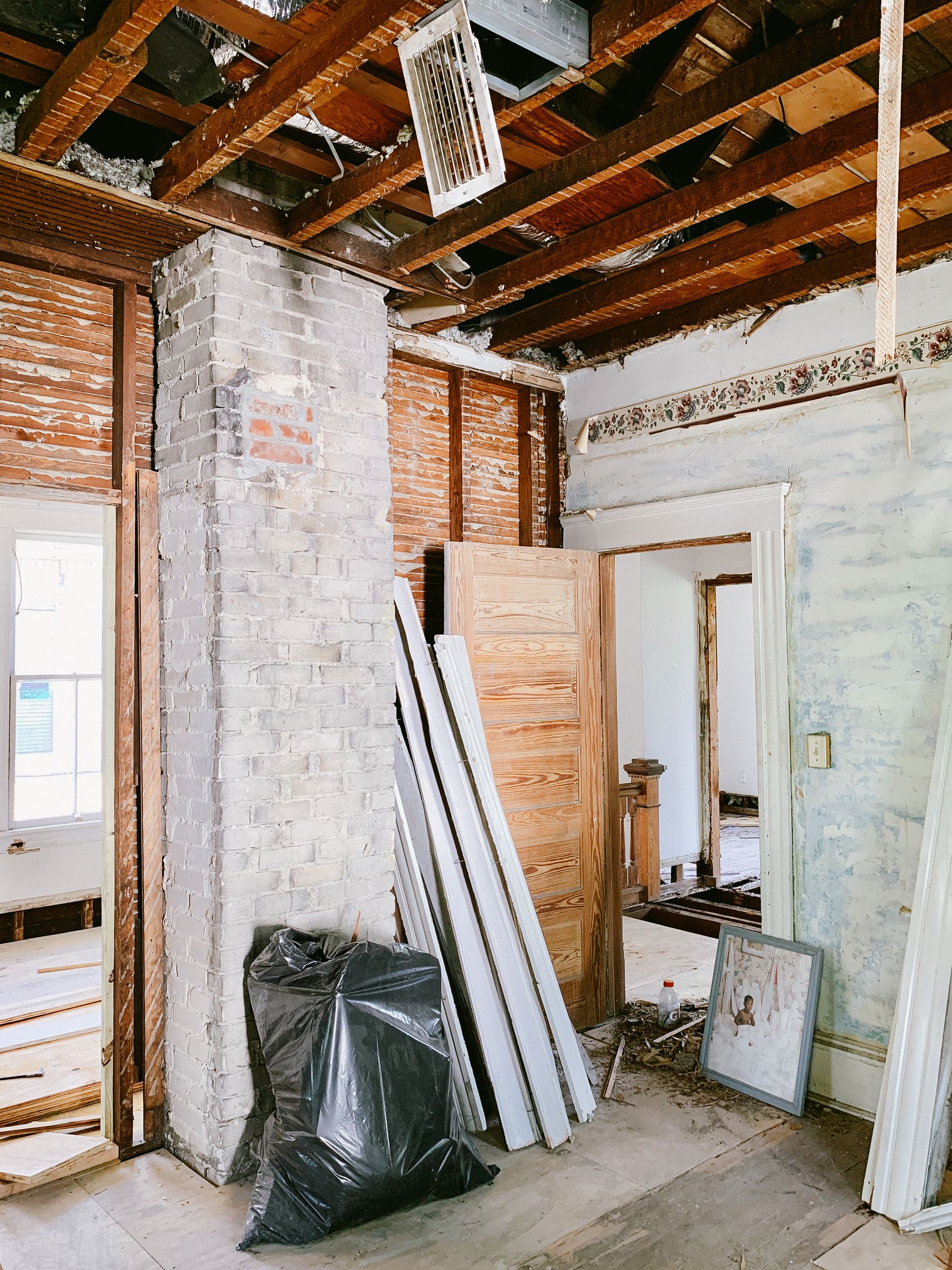
Existing buildings never become completely knowable on paper. Strong due diligence helps teams find the assumptions most likely to become cost, schedule, safety, preservation, and constructability problems before construction makes them expensive.
Adaptive reuse due diligence is often discussed as if it were a phase that ends when the surveys, reports, and record drawings have been assembled. In practice, the most consequential existing-condition questions frequently remain open until the team has investigated the specific interfaces that matter to the proposed work.
That is not necessarily a failure of the design team. ASTM E2018-24, the current guide for baseline commercial property condition assessments, recognizes that a baseline assessment carries a moderate level of uncertainty and that the appropriate level of due diligence depends on the user's objectives and risk tolerance. A walk-through survey can identify visible deficiencies, but it is not a substitute for every structural probe, hazardous-material survey, material test, code study, or opening-up investigation a complex reuse project may require.
The commercial question is therefore not, 'Have we investigated the building?' It is, 'Which remaining unknowns could materially change the design, price, sequence, approvals, or viability of the reuse?'
Adaptive reuse due diligence is not one report
A property condition assessment, a historic building condition assessment, a Historic Structure Report, a structural evaluation, an environmental site assessment, a hazardous-material survey, a code analysis, an enclosure investigation, and an MEP capacity study answer different questions. None should be assumed to cover the others unless the scope says so.
That distinction matters because a report can be entirely competent within its defined scope and still leave a critical project assumption untested. A laser scan can document geometry with great precision while revealing little about what is inside a wall. Record drawings can show original intent without documenting decades of alterations. A visual structural review can identify distress without establishing the capacity of a concealed connection. A Phase I environmental site assessment and a building asbestos survey address different forms of risk.
A useful due diligence scope is organized around decisions, not documents: what must the team know before it fixes the structural concept, closes the wall, prices the work, submits for approval, or commits to a construction sequence?
For related baseline work, see Preserve Signal's guides to a historic building conditions assessment and a Historic Structure Report.
Why experienced teams still get surprised
Record information describes a moment in time, not necessarily the building in front of you
Older buildings accumulate undocumented change. Openings are infilled. Framing is cut for later utilities. Roofs are rebuilt. Columns or bearing walls are altered. Equipment loads migrate. Repairs solve one problem while obscuring another. The longer and more intensively a building has been used, the less safe it is to assume that original drawings describe current field conditions.
National Park Service Preservation Brief 35 makes the same point from a preservation perspective: documentary research is valuable, but it must be reconciled with physical evidence. For design teams, the practical implication is simple. Existing drawings are evidence to test, not a warranty of field conditions.
The most expensive conditions are often concealed at interfaces
A building can look well understood until new work meets old construction. Beam ends embedded in masonry, buried steel, hidden lintels, roof-to-wall connections, foundation transitions, abandoned utilities, concealed water damage, and earlier patches can all matter disproportionately because they sit where load paths, moisture paths, fire separations, or new systems have to connect.
This is especially important when old and new structural systems must work together. Existing timber, masonry, or concrete was not built to the dimensional tolerances of a new steel or precast frame. Survey geometry, deflection, out-of-plumb conditions, connection access, erection tolerances, temporary bracing, and sequencing can become design issues in their own right. A connection that works cleanly in a model may be difficult to install against a century of field movement and alteration.
A new use changes which existing conditions matter
A condition that was tolerable for the previous use may become consequential under a new program. Floor loading, vibration, fire separations, egress, accessibility, ventilation, plumbing demand, electrical capacity, shaft space, acoustic separation, and envelope performance can all change when occupancy changes.
Where the International Existing Building Code is adopted, changes of occupancy and alterations are evaluated through the applicable existing-building framework. The 2024 IEBC historic-building provisions can provide flexibility for qualifying historic buildings, but they do not erase the need to investigate unsafe conditions or resolve structural, life-safety, accessibility, and other applicable requirements. The adopted edition, local amendments, building status, scope, and code official still control the actual path. Preserve Signal's historic building code guide covers that distinction in more detail.
Investigation itself has to be designed
More destructive investigation is not automatically better. Probes can damage significant finishes, interrupt occupied operations, create temporary structural conditions, or disturb regulated materials. The investigation has to be sequenced, documented, and performed by the right disciplines.
Hazardous-material planning is a clear example. OSHA's construction asbestos standard applies to covered construction, alteration, repair, maintenance, renovation, demolition, and other work involving asbestos. Project teams should not treat exploratory demolition as risk-free simply because its purpose is investigative. The specific survey, notification, exposure-control, and work-practice obligations depend on the building, materials, jurisdiction, and work being performed.
The better approach: manage unknowns as design inputs
The strongest adaptive reuse due diligence programs do more than collect reports. They maintain a working picture of uncertainty as the design develops. One useful tool is an existing-condition risk register or investigation matrix tied directly to project decisions.
- What is known, and what is still assumed?
- Which design decision depends on that assumption?
- What investigation would materially reduce the uncertainty?
- Who is qualified to perform or interpret that investigation?
- When must the answer be known to avoid redesign, procurement disruption, or a change in sequence?
- What is the consequence if the assumption is wrong: cost, schedule, safety, preservation impact, permitting, constructability, or business viability?
This approach changes the conversation from 'do more investigation' to 'investigate the unknowns with the highest consequence.' It also makes it easier to distinguish a genuine unforeseen condition from an assumption the team already knew it had not verified.
Probe where the project is decision-sensitive
Random opening-up work produces information. Targeted opening-up work produces decisions. The investigation plan should concentrate on locations where the proposed intervention is sensitive to existing conditions.
- Structural interfaces where new openings, concentrated loads, new frames, lateral-force elements, or reinforcement depend on concealed construction.
- Representative wall, roof, and floor assemblies before a detail is repeated across the building.
- Locations with staining, movement, corrosion, decay, or other evidence that visible damage may extend into concealed material.
- Existing shafts, risers, electrical rooms, utility entrances, and service routes before major MEP layouts are fixed.
- Material assemblies where repair compatibility depends on the actual masonry, mortar, concrete, timber, coating, or substrate present.
- Areas where preservation significance, hazardous materials, occupancy, or access limitations could make later investigation much harder.
This does not eliminate construction-phase discovery. It moves the most consequential discoveries earlier, when the team still has choices.
Constructor and specialty-trade input can improve the investigation
Many existing-condition risks are not purely design questions. They are construction questions: how a probe will be made safely, whether temporary shoring is needed, how a historic assembly can be opened and restored, what access a specialty trade needs, what a sequence will do to adjacent work, and how a finding should be priced.
That is one reason early preconstruction involvement can be valuable on complex reuse work. Preconstruction functions such as estimating, constructability review, logistics, scheduling, and risk management can inform design before documents are complete. Depending on the owner and procurement framework, those services may be available through CM at Risk, design-build, progressive design-build, a preconstruction services agreement, or other arrangements.
No delivery method makes an old building predictable, and design-bid-build remains appropriate or required on many projects. The more important question is whether the people who understand how the existing building will actually be opened, supported, repaired, connected, and sequenced are involved early enough to influence the investigation and design.
Due diligence is also an early-project opportunity signal
For firms that work in preservation and adaptive reuse, due diligence is not just a risk-management exercise for the owner. It is often the beginning of the professional and construction market around the project.
Measured surveys, laser scanning, structural evaluation, hazardous-material surveys, material testing, geotechnical investigation, envelope studies, code analysis, preservation consulting, exploratory demolition, cost estimating, temporary-works planning, constructability review, and specialty-trade investigation can all be commissioned before a general construction solicitation appears. The team assembled to answer those early questions can materially influence the scope, budget, phasing, and procurement strategy that follows.
Preserve Signal specializes exclusively in historic preservation and adaptive reuse project intelligence. It helps firms identify projects while those early studies, approvals, funding actions, and professional-service decisions are still taking shape, often before the work reaches formal procurement. The guide to finding historic preservation projects before formal procurement explains why those early signals matter commercially, while positioning before the RFP explains how firms can use that earlier window responsibly.
The practical standard is not zero surprises
A successful adaptive reuse due diligence process should not be judged by whether construction uncovers anything unexpected. Existing buildings contain uncertainty by definition, and some concealed conditions cannot be economically or responsibly exposed in advance.
A better standard is whether the team identified its consequential assumptions, investigated the ones most capable of changing the project, documented what remained unresolved, and carried enough technical, contractual, budget, and schedule flexibility to respond when the building provided new information.
The goal is not to make an old building fully predictable. It is to make fewer surprises expensive.