Owner plans and decisions
Capital plans, budgets, board actions, facility studies, property transactions, and development agreements can reveal a project before it reaches the market.

Preserve Signal Coverage
Preserve Signal monitors credible project signals across a focused 12-state region so firms can see what's forming, what's advancing, and where work may reach the market next.
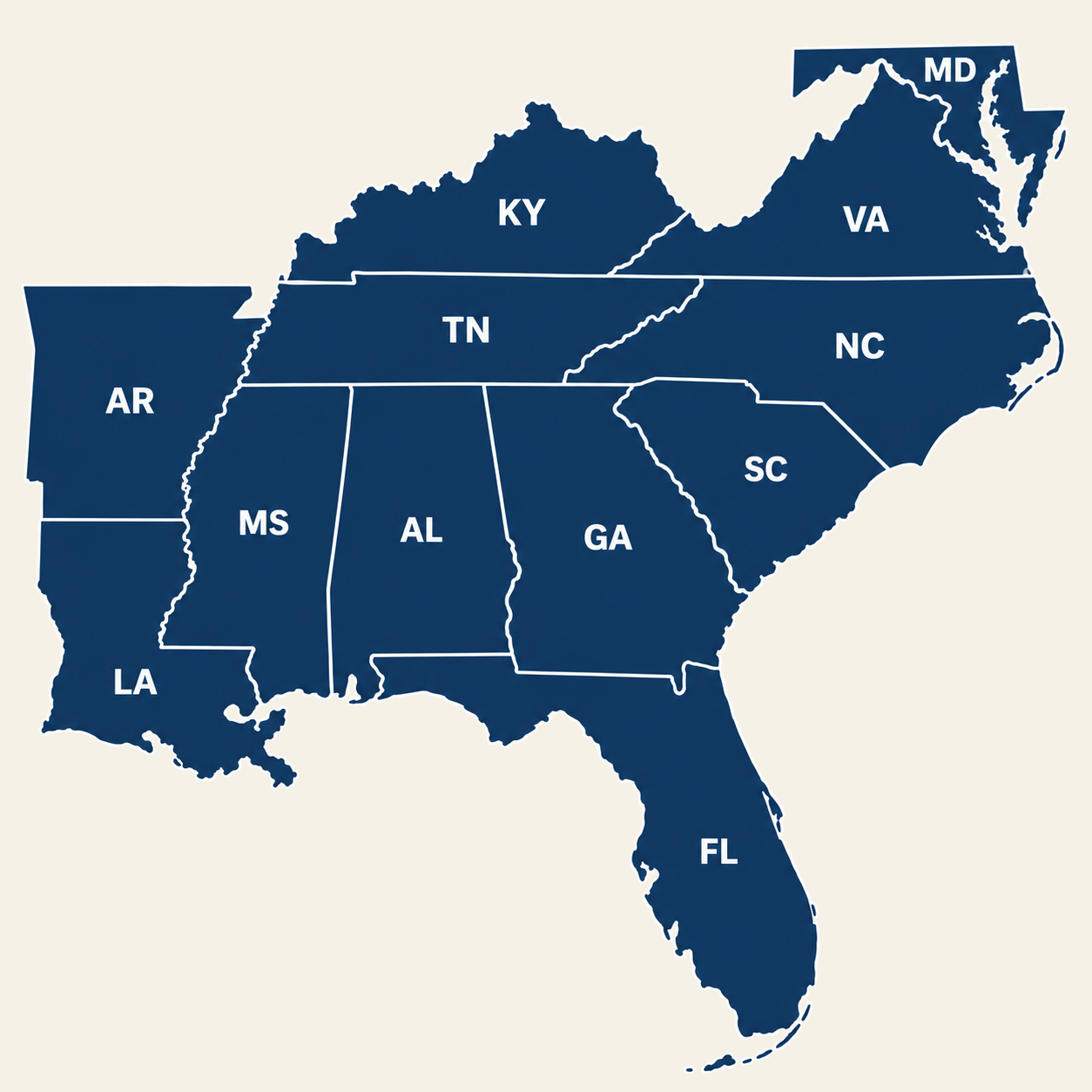
The current region
Preserve Signal monitors historic preservation and adaptive reuse activity across Virginia, North Carolina, South Carolina, Georgia, Florida, Alabama, Mississippi, Louisiana, Tennessee, Kentucky, Arkansas, and Maryland, as of today. More states will be added soon.
01
Each state, city, county, university, authority, and nonprofit publishes information differently. A project may emerge in a local capital plan, state grant record, board packet, preservation review, development approval, or procurement portal.
The research method stays consistent: identify the property and owner, connect the source trail, distinguish a real project from a passing mention, assess its current stage, and keep following the evidence as the project changes.
02
The most useful opportunities often leave a trail before a formal solicitation is released.
Capital plans, budgets, board actions, facility studies, property transactions, and development agreements can reveal a project before it reaches the market.
Grants, appropriations, tax credits, preservation review, zoning actions, and public approvals help show whether a proposed project is gaining definition.
Consultant selections, permit activity, RFQs, RFPs, invitations to bid, and awards show when work is becoming actionable for a firm.
03
Early plans, funding actions, feasibility work, and public approvals can signal where future design services may be needed.
Financing, design progress, delivery decisions, permits, prequalification, and procurement schedules provide a clearer view as construction approaches.
Rehabilitation scopes can point to masonry, roofing, windows, plaster, woodwork, finishes, building systems, and other specialized work.
Property control, incentives, tax credits, approvals, and proposed use can reveal where adaptive reuse is becoming viable.
04
These public guides explain the sources and milestones that sit behind the active member database.
Understand how scattered project records become a useful, current opportunity trail.
Explore guideFollow the property, financing, approvals, design, and procurement signals behind a changing use.
Explore guideSee where preservation work often appears before an RFQ, RFP, or bid notice.
Explore guideMove earlier
Member access provides active historic preservation and adaptive reuse opportunities, current stages, source trails, and actual procurement intelligence across the south and east.
Get Access