
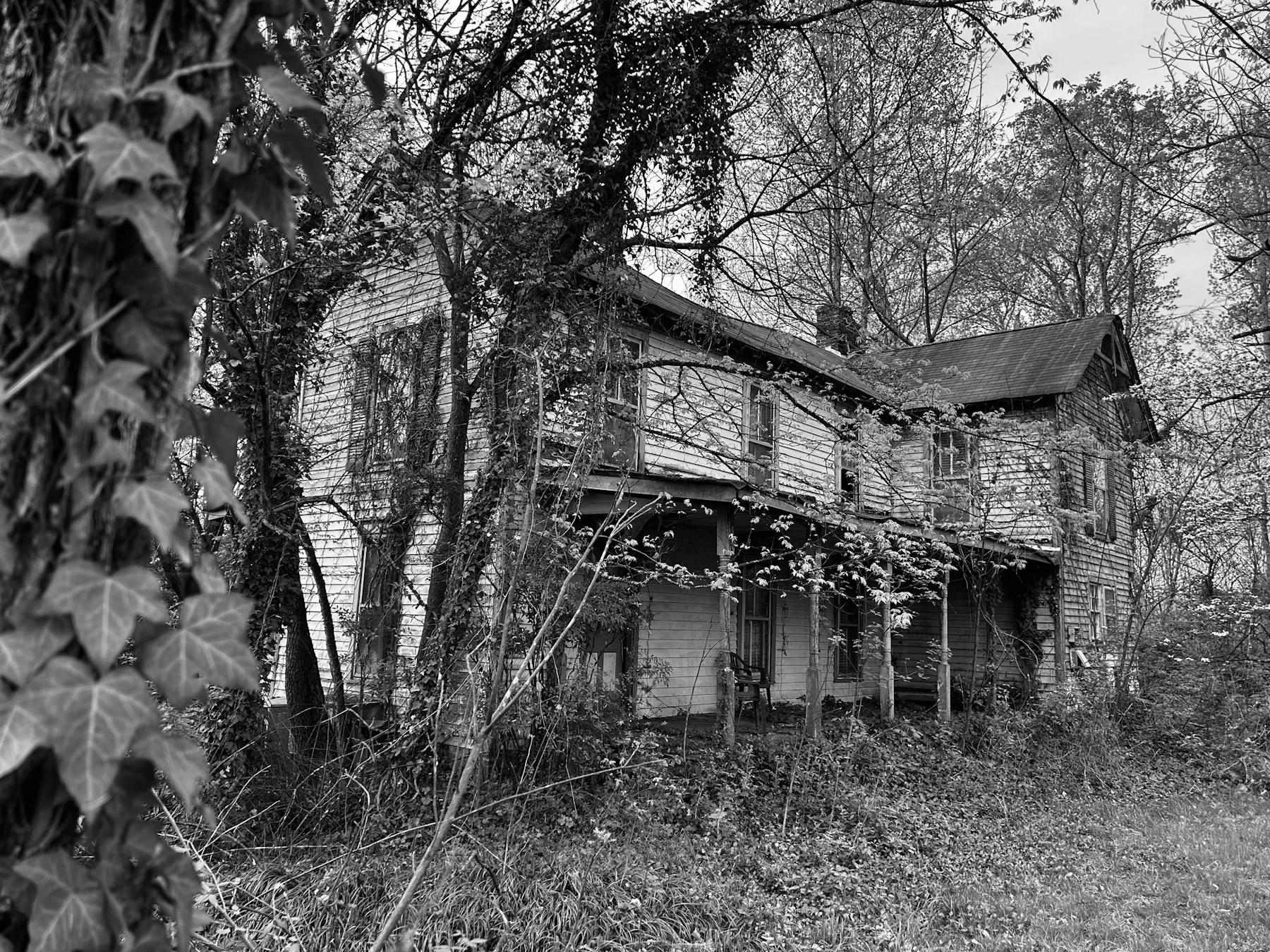
Demolition by neglect is the gradual loss of a building through deterioration that isn't corrected. In historic preservation, the phrase can also have a specific regulatory meaning: some local governments use demolition-by-neglect provisions to require maintenance or repairs before a designated historic property deteriorates beyond repair.
There isn't one national demolition-by-neglect rule. The properties covered, conditions that qualify, enforcement process, available remedies, appeal rights, and economic-hardship provisions depend on state and local law. That makes the local ordinance the starting point whenever the phrase appears in a planning or preservation record.
What does demolition by neglect mean?
At its core, demolition by neglect addresses deterioration caused or allowed by inadequate maintenance. Local ordinances may identify conditions such as failing roofs, ineffective weather protection, deteriorated foundations or structural members, unstable chimneys, decayed exterior materials, broken openings, or other defects that threaten the survival of a historic resource.
But a deteriorated or vacant building isn't automatically in a legal state of demolition by neglect. A jurisdiction's ordinance defines which properties are covered and what findings have to be made. Durham, North Carolina, for example, applies its provisions to designated historic landmarks and properties identified as contributing or pivotal in designated historic districts. Raleigh's ordinance similarly limits its demolition-by-neglect article to Historic Landmarks and contributing resources in Historic Overlay Districts.
That distinction is one reason it helps to understand the difference between a historic district, a locally designated landmark, and a property that is only listed in the National Register.
National Register listing doesn't create a federal maintenance requirement
A building can be listed in the National Register of Historic Places and still not be subject to a demolition-by-neglect ordinance. The National Park Service states that National Register listing by itself places no federal restrictions or maintenance requirements on a non-federal property owner. State or local preservation laws, easements, grant agreements, tax-credit obligations, or other legal instruments can create separate requirements.
For project research, 'National Register listed' and 'subject to demolition-by-neglect enforcement' therefore shouldn't be treated as synonyms. The relevant question is which local designation, ordinance, agreement, funding condition, or other authority actually applies.
How a demolition-by-neglect case can unfold
The process varies by jurisdiction, but a formal case can involve a complaint or petition, staff investigation, property inspection, notice to the owner, a hearing or administrative determination, an order identifying repairs, and an appeal or hardship process. Durham states that a community member can initiate an investigation and that a finding can lead to required corrective measures, an abatement action, or civil penalties. Raleigh uses a different petition process and a detailed undue-economic-hardship procedure that can stay a repair order while the hardship claim is reviewed.
A local historic preservation commission may be involved, but its exact role depends on the ordinance. Repairs ordered to stop deterioration also shouldn't be confused automatically with a certificate of appropriateness process. A jurisdiction may connect the two, exempt ordinary maintenance, or regulate them through separate procedures.
Why undue economic hardship matters
A demolition-by-neglect order can be more affirmative than a certificate of appropriateness because it may require an owner to spend private funds on repairs rather than simply regulate a proposed change. In North Carolina, G.S. 160D-949(b) expressly requires demolition-by-neglect regulations to include appropriate safeguards protecting owners from undue economic hardship. Raleigh operationalizes that requirement through a hardship review process focused on whether the property can provide a reasonable return or reasonably beneficial use and, when hardship is found, a plan for relief.
That hardship protection also sits against the broader constitutional backdrop of regulatory-takings law. Penn Central Transportation Co. v. New York City, the Supreme Court's landmark preservation case, established the familiar multi-factor framework for evaluating regulatory takings. But an undue-hardship procedure isn't a universal constitutional safe harbor, and not every maintenance order that imposes cost is a taking. The governing ordinance, state enabling law, facts of the property, and applicable takings doctrine all matter.
Demolition by neglect isn't the same as an unsafe-building case
Historic-preservation maintenance rules can overlap with building, housing, nuisance, and public-safety enforcement, but the legal tools aren't identical. In North Carolina, G.S. 160D-948 expressly provides that historic-preservation law doesn't prevent construction, alteration, restoration, moving, or demolition that a building inspector or similar official certifies is required for public safety because of an unsafe or dangerous condition. Durham and Raleigh also preserve separate city authority to address unsafe buildings.
That can put preservation staff and code or building officials on parallel tracks: one process may be trying to stabilize historic fabric while another addresses an immediate life-safety hazard. It doesn't mean every unsafe-building order automatically overrides preservation review in every jurisdiction, but an emergency condemnation, shoring, vacate, repair, or demolition order can change the practical path quickly. Project teams should identify which authority is controlling and whether the departments are coordinating.
What about Section 106?
Federal preservation review uses a separate concept. Under 36 CFR 800.5(a)(2)(vi), neglect of a historic property that causes deterioration is listed as an example of an adverse effect under Section 106, subject to the regulation's specific exception for certain properties of religious and cultural significance to an Indian Tribe or Native Hawaiian organization. That federal adverse-effect rule isn't the same thing as a local demolition-by-neglect ordinance.
Section 106 applies within the federal undertaking framework. A local demolition-by-neglect ordinance, by contrast, derives from state and local preservation authority and can have its own coverage, procedures, enforcement tools, and hardship standards.
Why demolition by neglect can be a project signal
A demolition-by-neglect record can reveal that a deteriorating property has moved from passive concern into an active administrative process. That can create demand for a historic building conditions assessment, structural engineering, roof and drainage work, masonry repair, window and door stabilization, temporary protection, cost estimating, or preservation design.
The signal still needs context. A complaint alone doesn't prove that repairs are funded, that a full rehabilitation will follow, or that construction procurement is imminent. A stronger project signal appears when enforcement is paired with an owner commitment, public funding, a grant, a property transfer, redevelopment plans, a design contract, a repair order with a defined deadline, or procurement activity.
Municipal abatement can be an especially strong signal when the owner doesn't comply. Durham's current UDO allows the City to seek abatement and, after a court contempt process and City execution of the abatement order, places a lien on the property for the cost of that work. Separate unsafe-building and housing authorities can also create public repair, removal, demolition, and lien mechanisms. The exact authority has to be traced carefully: G.S. 160D-949(b) authorizes local demolition-by-neglect regulation and requires hardship safeguards, but it doesn't itself spell out a general city-entry-and-lien procedure. Once a city begins scoping stabilization, obtaining estimates, authorizing abatement, or procuring a contractor, those public records can be among the strongest early signals that preservation work is moving from enforcement into an executable scope.
That is the same reason Preserve Signal treats individual records as pieces of a larger project trail. See the guide to finding historic preservation projects before formal procurement for the other records that can help show whether a preservation issue is turning into real work.
A demolition delay ordinance serves a different purpose: it can temporarily pause a proposed demolition while alternatives are considered. Unsafe-building authority and other reviews may affect that timeline.
The practical takeaway
Demolition by neglect is both a preservation concern and, in some jurisdictions, a defined enforcement mechanism. The phrase shouldn't be read as a universal legal status, and it shouldn't be inferred simply from vacancy, visible deterioration, National Register listing, or an unsafe-building notice.
When the term appears in a project file, check the local ordinance first. Identify which properties it covers, what condition triggered the case, who made the determination, what repairs or deadlines were imposed, whether hardship or appeals are pending, and whether funding or professional services are beginning to follow. Those details tell you far more about the likely preservation work than the label alone.