
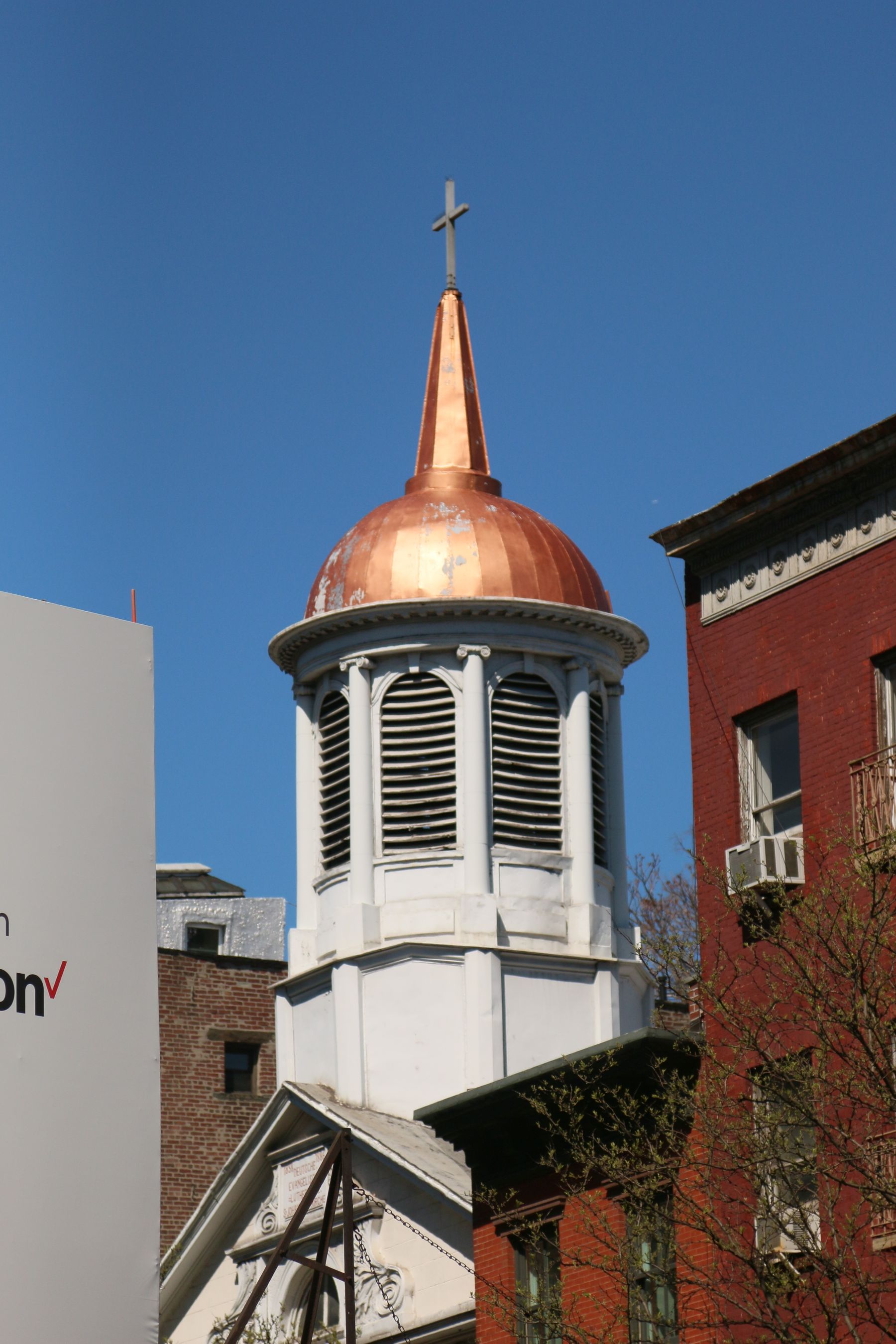
Historic architectural sheet metal restoration focuses on decorative and protective metalwork attached to buildings: projecting cornices, stamped ornaments, window hoods, finials, parapet cladding, pressed-metal wall panels, and related fabrications. These assemblies can look like cast stone, carved wood, or cast iron from the street, but their materials, seams, anchorage, and failure mechanisms may be very different.
The first question isn't how to reproduce an ornament. It's whether the original material and supporting assembly can be safely retained and repaired. That requires identifying what was made, how it was attached, why it deteriorated, and which elements contribute to the building's historic character.
Architectural sheet metal isn't the same as metal roofing
Historic metal roof restoration usually concerns roof pans, seams, flashings, underlayment, coatings, and drainage. Architectural sheet metal may form the visible vertical face or underside of a cornice, a stamped-metal facade, a window hood, or decorative details mounted on a backup frame. A projecting cornice may combine both decorative cladding and a separate roof surface. Repairing its visible face without correcting leaks above or corroded connections behind it won't produce a durable result.
What materials and fabrication methods are found on historic buildings?
Older sheet-metal ornament can use galvanized steel, zinc, copper, tin-plated or other coated ferrous sheets, and combinations of sheet stock with structural steel or timber framing. Some ornament was hand formed; other elements were stamped or pressed in dies and assembled from repeatable components. Appearance alone doesn't reliably establish the alloy. Also distinguish sheet-metal ornament from cast iron or cast zinc components, which involve different manufacturing and repair methods.
Record sheet dimensions, profile depth, seam locations, rivets, soldered joints, fasteners, backing, coatings, and surviving repeats. Historic photographs and trade catalogs can be useful when a piece is missing, but on-site physical evidence remains essential. A small representative sample may be needed to confirm material and coating history.
Common causes of deterioration
- Water from above or behind: failed cornice roofing, parapet caps, open seams, blocked drainage, or improperly integrated flashings can trap moisture inside apparently intact ornament.
- Corrosion and perforation: coating loss, wet concealed surfaces, and aggressive past repairs may thin sheet metal or destroy fasteners, particularly at horizontal ledges and connections.
- Movement and separation: failed rivets, loosened anchors, deteriorated backup framing, differential thermal movement, or previous incompatible repairs can leave panels distorted or insecure.
- Material incompatibility: inappropriate contact between dissimilar metals and poorly managed runoff can accelerate corrosion. Replacement fasteners and flashings need to be selected as part of the assembly.
- Lost details and recurring patches: repeated sealant, filler, or coating campaigns may conceal the original profile while leaving the source of deterioration untreated.
Investigate the complete cornice or facade assembly
A reliable survey begins with photographs and a feature-by-feature condition map, then examines the assembly from safe close-range access where justified. The team may need to distinguish ornament from load-bearing components and expose representative connections. For large projecting cornices, concealed steel ribs or trusses and their attachments to masonry or steel framing can be central to safety. The National Park Service case study of a metal roof cornice demonstrates how failing decorative zinc, galvanized steel facing, and water entry were evaluated together rather than as separate cosmetic problems.
Loose material, falling-object risk, and visibly displaced work call for prompt protection and assessment by appropriately qualified professionals. A decorative-metal specialist can help investigate fabrication, but structural stability and public safety shouldn't be inferred from a visual survey alone.
Repair, partial replication, or full replacement?
Repair sound original material wherever feasible. Depending on the metal and condition, work may involve cleaning and corrosion treatment, carefully selected soldering or mechanical repairs, localized sheet patches, reinforcing connections, selective replacement of failed ornament, and a compatible coating system. The repair method must account for the actual metal and any original finishes.
When an ornamental element is missing or beyond reasonable repair, a surviving repeat can serve as a pattern for fabrication. Drawings should document profiles, relief depth, module spacing, edge details, attachment, and finish, not simply a photograph of the facade. Shop samples and a field mockup can establish fit and visual compatibility before large quantities are fabricated. A substitute material may be considered only after its weight, stiffness, thermal behavior, durability, appearance, and attachments have been evaluated for the particular location and preservation requirements.
The NPS stamped-metal exterior siding case study shows why replicated panels require careful attention to surviving patterns, materials, and installation details. It isn't a blanket endorsement of wholesale replacement.
Coatings, cleaning, and fabrication details
Identify earlier coatings and assess whether lead-based paint or other hazards may be present before planning abrasive work or paint removal. The least damaging effective preparation and a metal-appropriate primer and finish are generally more defensible than indiscriminate blasting. Remove corrosion and failed coatings using a method verified on representative areas, and address water entry before recoating.
Shop drawings should show formed profiles, seams, laps, water-shedding edges, fastener types, galvanic compatibility, attachment spacing, allowances for movement, and interface details with adjacent masonry and roofing. Sensitive fabricators can reproduce ornament, but they still need clear acceptance criteria and coordination with the architect or engineer responsible for design.
How a historic sheet-metal restoration scope becomes bid-ready
- Existing-conditions documentation: keyed elevations, photographs, material identification, condition survey, and quantities separated by component and repair type.
- Investigation and stabilization: clear responsibility for unsafe conditions, probes, access, anchorage review, and temporary protection.
- Treatment schedule: identify retained, repaired, locally replaced, and replicated components, with evidence supporting major replacement decisions.
- Mockups and samples: physical profile samples, finish samples, repair trials, and documented acceptance procedures.
- Interface and performance details: coordinate the cornice roof, parapets, drains, masonry, flashings, and concealed supports so repaired ornament isn't exposed to the same failure.
- Qualifications and quality control: relevant examples of fabrication and historic rehabilitation work, field measurements, submittals, approved mockups, and construction-phase review.
Where early project opportunities can appear
For preservation contractors, metal fabricators, and facade specialists, architectural sheet-metal work may first appear in a conditions assessment, historic structure report, emergency stabilization contract, municipal capital plan, preservation commission application, architectural design solicitation, or larger building-envelope rehabilitation. Those early records don't prove that fabrication or construction has been funded. They do show when a team may be defining a scope and considering specialist needs.
See historic facade restoration for coordination of mixed exterior materials and how to find preservation projects before formal procurement for the broader public-record research process. Preserve Signal tracks active preservation and adaptive reuse projects across twelve states so firms can investigate credible early signals instead of relying on bid notices alone.
The takeaway
Historic sheet-metal restoration is a specialized combination of preservation investigation, metal fabrication, envelope repair, and sometimes structural engineering. Match the existing material and assembly before choosing a repair; retain sound historic fabric; document missing ornament carefully; and design the roof, facade, and concealed attachments as connected systems.
Related reading
- Historic metal roof restoration: repair, coatings, and seams
- Historic facade restoration: coordinated investigation and repair
- Historic preservation architects: roles and qualifications
- Historic masonry restoration: diagnosis and specifications
Official sources
- National Park Service, Preservation Tech Notes: Metals No. 2, Restoring Metal Roof Cornices
- National Park Service, Preservation Tech Notes: Metals No. 3, In-Kind Replacement of Historic Stamped Metal Exterior Siding
- National Park Service, Preservation Brief 27, The Maintenance and Repair of Architectural Cast Iron
- National Park Service, Preservation Brief 49, Historic Decorative Metal Ceilings and Walls
- National Park Service, Secretary of the Interior's Standards for the Treatment of Historic Properties