
The National Historic Lighthouse Preservation Act of 2000, usually shortened to NHLPA, created a specialized process for finding new stewards for federally owned historic light stations that a federal agency no longer needs.
The law doesn't simply give old lighthouses away. It gives qualified public agencies and nonprofit-type organizations a chance to acquire an eligible historic light station without paying a purchase price, but the new steward has to accept long-term preservation, public-use, maintenance, and federal-access conditions.
If no stewardship applicant is approved, the General Services Administration can offer the light station for public sale instead. The current program is codified at 54 U.S.C. §§ 305101-305106 and is administered through a federal partnership involving the National Park Service, GSA, the U.S. Coast Guard, and State Historic Preservation Officers.
What does the National Historic Lighthouse Preservation Act cover?
NHLPA applies to federally owned historic light stations that have been determined excess to the needs of the agency with administrative jurisdiction and that qualify as historic properties. For this program, that means the light station is listed in, or eligible for inclusion in, the National Register of Historic Places.
The statutory term historic light station is broader than the tower itself. It can include a lighthouse or light tower, keeper's dwelling, oil house, fog signal building, boathouse, storage buildings, piers, walkways, associated land, and related improvements. The law doesn't authorize conveyance of submerged land. The Submerged Lands Act generally recognizes state title to lands beneath navigable waters within state boundaries, subject to federal and other statutory exceptions. For offshore or water-based light stations, that can mean the federal government conveys the historic structure while the new steward separately obtains a bottomland lease, easement, or other authorization from the relevant state or other landowner. The exact arrangement depends on the site's title and jurisdiction.
For the underlying eligibility framework, see Preserve Signal's guide to the National Register of Historic Places.
Who can receive a lighthouse at no cost?
The no-cost conveyance route isn't open to every buyer. Federal law defines eligible entities to include:
- Federal departments and agencies.
- A department or agency of the state where the historic light station is located.
- The local government of the community where the light station is located.
- Nonprofit corporations.
- Educational agencies.
- Community development organizations.
For the nonfederal categories, the applicant has to agree to the NHLPA deed conditions and demonstrate that it is financially able to maintain the property. Private individuals and for-profit businesses aren't eligible for the no-cost stewardship transfer simply because they're willing to preserve the lighthouse, although they may be able to participate later if the property proceeds to a public sale.
How the NHLPA transfer process works
The program follows a structured federal process rather than an ordinary real-estate listing.
- The federal agency with administrative jurisdiction determines that the historic light station is excess to its needs.
- GSA issues a Notice of Availability. Qualified eligible entities generally have 60 days to submit a Letter of Interest.
- GSA forwards qualified interested parties to NPS and coordinates a site visit with the relevant federal partners.
- After the site visit, an applicant generally has 90 days to submit its completed NHLPA application to NPS.
- NPS evaluates the applications, including the proposed preservation approach, management capability, financial capacity, public-use plan, and ability to comply with federal preservation requirements. The SHPO is given the applications and an opportunity to comment.
- The NPS review process leads to a recommendation through the Department of the Interior. If a stewardship applicant is selected, GSA completes the conveyance by quitclaim deed without monetary consideration.
If no applicant is approved, the Act directs the historic light station to be offered for sale. That public-sale route is different from the competitive no-cost stewardship process.
What does a new NHLPA steward agree to?
The no-cost transfer comes with obligations that are far more specific than ordinary National Register listing. The deed conditions run with the land, so they can continue to bind later ownership.
Among other things, the recipient must maintain the historic light station at its own cost in accordance with the National Historic Preservation Act, the Secretary of the Interior's Standards for the Treatment of Historic Properties, and other applicable law.
Proposed changes to a no-cost conveyed light station are subject to federal review and approval under the statute, with consultation with the SHPO. The recipient also has to make the station available to the general public for educational, park, recreational, cultural, or historic-preservation purposes at reasonable times and under reasonable conditions.
The recipient can't sell, convey, assign, exchange, or encumber the property or associated historic artifacts conveyed with it without approval of the Secretary of the Interior. Commercial activity also requires federal approval under the no-cost conveyance terms. Federal law also makes reversion a discretionary remedy: when specified deed conditions are violated, 54 U.S.C. § 305104(c) gives the GSA Administrator the option to return the light station or associated historic artifacts to the United States. Reversion isn't automatic merely because a compliance issue arises.
Those recorded restrictions are a distinct federal conveyance mechanism, not the same thing as an ordinary historic preservation easement. Under NHLPA, the statutory deed conditions are covenants running with the land and are backed by federal approval, inspection, and reversion authorities. A conventional preservation easement, by contrast, is generally a property interest held and enforced by a government or qualified preservation or conservation organization under applicable state property law. Both can create long-term obligations, but their legal source and enforcement structure are different.
What happens to the lighthouse's navigational function?
Transferring the historic property doesn't necessarily transfer the active aid to navigation. Federal aids to navigation can remain the personal property of the United States and continue to be operated and maintained by the federal government for as long as they're needed.
The United States can reserve rights to remove, replace, or install navigational equipment and to enter the light station for operation, maintenance, inspection, and compliance purposes. The new steward isn't required to maintain the federal aid to navigation merely because it owns the historic light station.
That split ownership is one of the program's defining features: a nonprofit or public entity can become steward of the historic tower and associated property while the Coast Guard continues to operate the active light or other federal navigation equipment.
What if nobody is approved for a no-cost transfer?
If no applicant is approved through the stewardship process, the historic light station is offered for sale through GSA. The sale route can bring in a private purchaser who wasn't eligible for the no-cost transfer.
Public sale doesn't erase the preservation framework. Federal law requires sale terms and deed covenants that protect the historic integrity of the light station and preserve federal control of active aids to navigation as needed. But the statutory public-access and commercial-activity provisions that apply to a no-cost eligible-entity conveyance aren't identical to the sale terms, so the two paths shouldn't be treated as interchangeable.
Three NHLPA examples in Preserve Signal's coverage area
The program has affected light stations throughout the South and Mid-Atlantic. Three examples illustrate both the stewardship and sale paths.
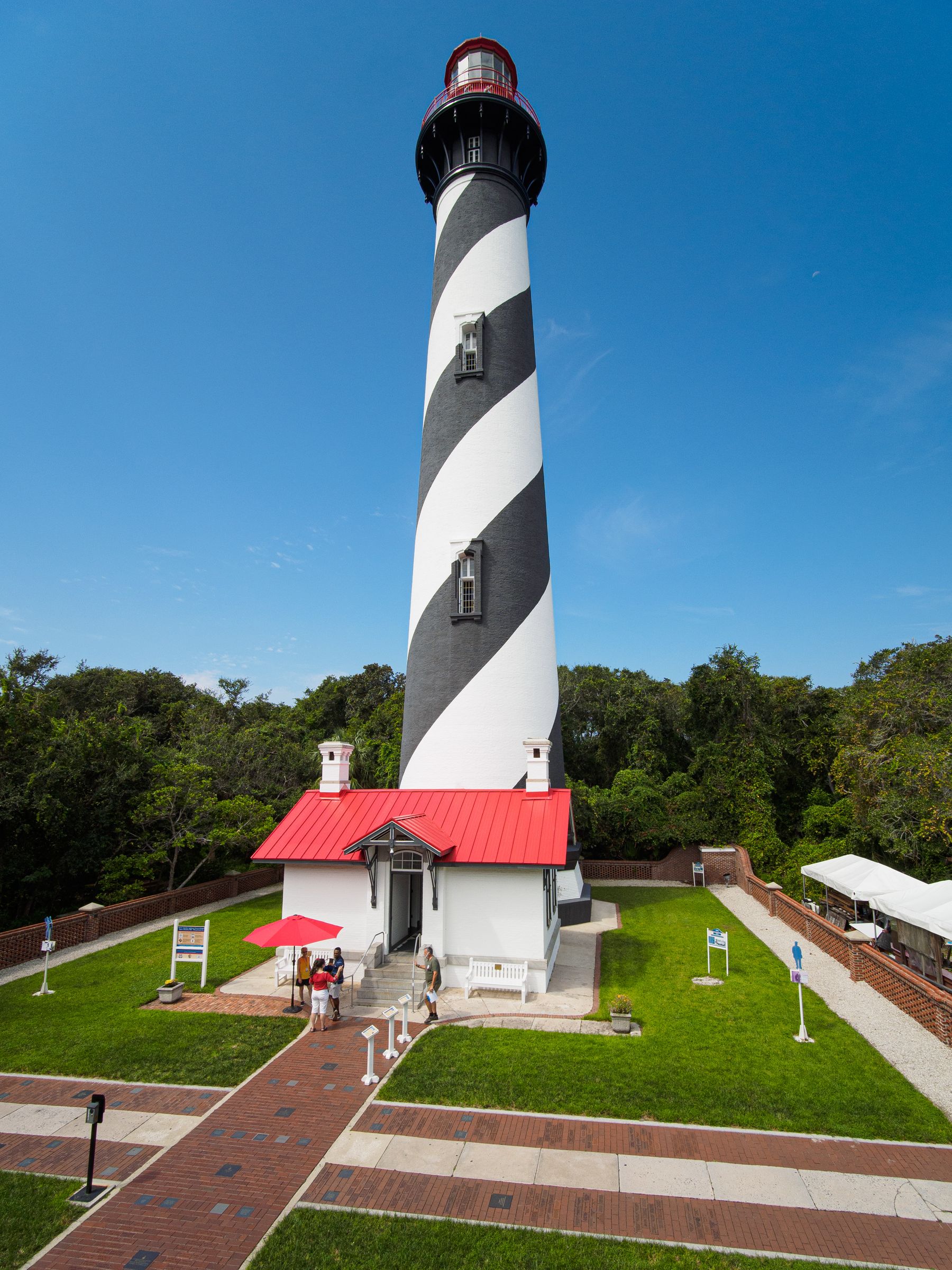
- St. Augustine Light | Florida. GSA's program history identifies St. Augustine Light as the first lighthouse transferred under NHLPA authority, in 2002. It was conveyed through the no-cost stewardship program to a nonprofit.
- Tybee Island Lighthouse Complex | Georgia. GSA's NHLPA transfer summary lists the Tybee Island Lighthouse Complex as another 2002 no-cost transfer to a nonprofit, making it one of the program's earliest stewardship conveyances.
- Baltimore Lighthouse | Maryland. The program's 2011 report identifies Baltimore Lighthouse as a 2006 public sale and reports that it generated $260,000, illustrating the auction path used when a light isn't conveyed through the stewardship process.
How NHLPA relates to Section 106
NHLPA and Section 106 are related parts of the federal preservation system, but they do different jobs. NHLPA provides a disposal and stewardship framework for eligible excess federal light stations. Section 106 requires federal agencies to consider the effects of federal undertakings on historic properties.
A federal disposal or transfer can have separate Section 106 responsibilities depending on the undertaking and the way historic-property effects are addressed. NHLPA itself also builds preservation review directly into the post-transfer deed conditions for no-cost conveyances.
For the broader review process, see Preserve Signal's guide to Section 106.
Why an NHLPA notice can matter as a project signal
A Notice of Availability isn't a construction solicitation, but it can be the start of a new stewardship and capital-planning cycle. Potential applicants need to understand the physical condition, preservation needs, public-access strategy, operations, and long-term cost of the station before they take ownership.
After transfer, a new steward may need condition assessments, stabilization, structural or envelope work, accessibility improvements, visitor facilities, interpretation, grant applications, or phased rehabilitation. The exact work depends on the property, deed conditions, approved stewardship plan, funding, and federal review requirements.
That can make documents such as a Historic Structure Report or a preservation grant application useful follow-on signals. For the broader funding trail, see why a historic preservation grant application can matter before the award.
For firms pursuing early-stage work, the strongest signal usually comes from connecting the NHLPA notice or transfer with building assessments, funding, design activity, agency approvals, or procurement. That is the same approach described in Preserve Signal's guide to finding historic preservation projects before formal procurement.
The practical takeaway
The National Historic Lighthouse Preservation Act is a federal stewardship program, not simply a lighthouse-sale law. It gives qualified public and nonprofit-type entities the first opportunity to take ownership of eligible excess historic light stations without a purchase price, in exchange for significant long-term preservation and public-use obligations.
If no qualified steward is approved, GSA can move to public sale under a different set of statutory terms. In either case, the light station's National Register status, federal navigation equipment, deed covenants, and preservation requirements can continue to shape the property long after the federal disposal process ends.