
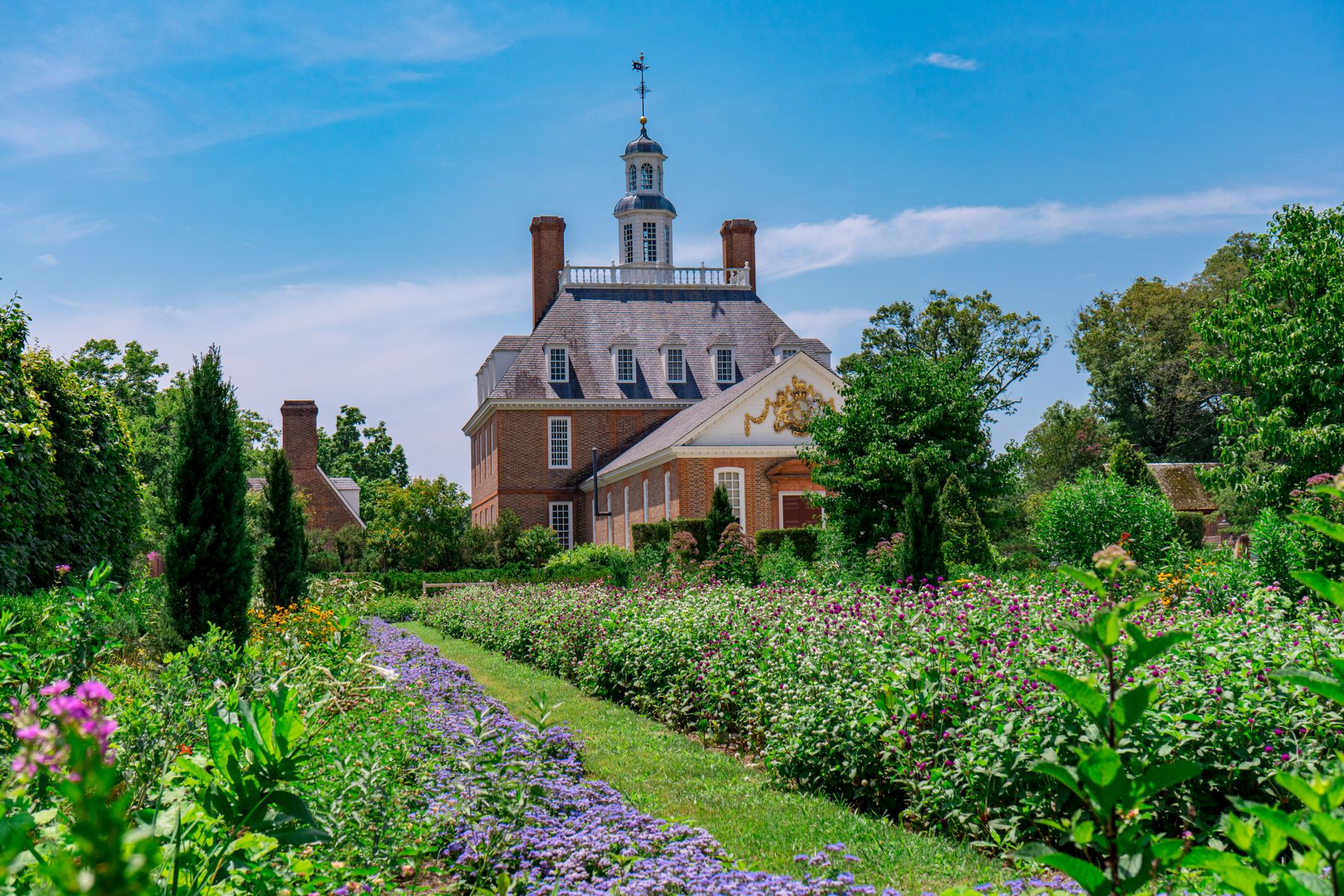
A historic landscape architect is a landscape architect with specialized experience in researching, evaluating, planning, designing, and managing cultural landscapes. The work can involve designed gardens and parks, but it can also address campuses, cemeteries, battlefields, civic grounds, transportation corridors, agricultural landscapes, institutional sites, and other places where history is expressed through the relationship between land, vegetation, circulation, structures, water, views, and use.
The National Park Service describes cultural landscapes as historically significant places that show evidence of human interaction with the physical environment. NPS commonly organizes them into four categories: historic designed landscapes, historic vernacular landscapes, historic sites, and ethnographic landscapes. A property can reflect more than one category. Preserving one isn't simply a matter of replacing plants or making a site look old. The work begins with understanding why the landscape is significant, what survives from its important periods, how it has changed, and which characteristics still convey that significance.
That landscape-scale perspective complements the work of a historic preservation architect, whose primary focus is generally the building or structure. On many sites, the two disciplines overlap and coordinate closely.
Historic landscape architect isn't a separate national license
Landscape architecture is a regulated profession under state law, and licensing requirements vary by jurisdiction. Historic landscape architect isn't a separate nationwide license. The Secretary of the Interior's formally adopted 1983 Professional Qualification Standards in 36 CFR Part 61, Appendix A cover history, archaeology, architectural history, architecture, and historic architecture; they don't establish a separate historic landscape architecture category. A broader set of standards published in proposed form in 1997 described historic landscape architecture as a specialization, but those expanded standards weren't formally adopted for federal regulatory purposes.
Public agencies, SHPO consultant directories, grants, and individual solicitations may nevertheless use historic landscape architecture as a qualification category or require particular landscape-architecture credentials and preservation experience. A historic landscape consultant may contribute landscape history, research, documentation, preservation planning, horticultural knowledge, or cultural-resource analysis without serving as the licensed landscape architect responsible for regulated professional design services. The controlling solicitation or program requirements should be checked rather than assuming one national credential applies everywhere.
The work starts with significance, history, and existing conditions
Before proposing new paths, plantings, grading, lighting, drainage, or site amenities, the team needs to understand the landscape as a historic resource. Research may draw from historic plans, maps, photographs, aerial imagery, planting records, maintenance files, correspondence, archaeological information, National Register documentation, oral histories, and physical investigation. Field work can document topography, spatial organization, circulation, vegetation, buildings and structures, water features, small-scale features, views and vistas, and evidence of past land uses.
The same principle applies across preservation disciplines: age alone doesn't determine significance. See Preserve Signal's guide to character-defining features for the broader concept of identifying the physical qualities that convey why a historic property matters.
Cultural Landscape Reports can become the central planning document
For significant landscapes, one of the most important work products is a Cultural Landscape Report, or CLR. National Park Service guidance describes the CLR as the primary treatment document for a cultural landscape and a tool for long-term management. NPS also maintains a distinct Cultural Landscapes Inventory, or CLI, which provides baseline information about the location, historical development, significance, characteristics, and condition of cultural landscapes in the national park system. A CLI can identify and evaluate a landscape before a more detailed treatment effort is commissioned, making inventory work an especially early signal. Other agencies may use different inventory names and workflows, so a CLI shouldn't be treated as a universal prerequisite to a CLR.
A CLR typically documents historical development and existing conditions, evaluates significance and integrity, and establishes treatment recommendations. NPS guidance describes a three-part model: Part I addresses site history, existing conditions, and analysis and evaluation; Part II develops the treatment plan; and Part III records treatment after implementation. Not every historic landscape project requires a CLR, and the document's scope should fit the property and management need.
Because vegetation and other landscape systems continue to change after construction, treatment planning may also produce a preservation maintenance plan, stewardship manual, or comparable guidance covering cyclical care, pruning, replacement, soils, turf, irrigation, pest and disease management, and protection of significant features. Landscape preservation is an ongoing management responsibility, not a one-time capital project. For comparison, a building-focused Historic Structure Report performs a related planning function for historic structures.
Treatment isn't the same as recreating an old photograph
Historic landscape treatment should be based on significance, integrity, existing conditions, use, and an appropriate preservation approach. The Secretary of the Interior's Standards recognize four treatments for historic properties: preservation, rehabilitation, restoration, and reconstruction. NPS has specific Guidelines for the Treatment of Cultural Landscapes that apply those concepts to landscape resources.
Landscapes are dynamic. Trees mature and die. Plant communities change. Drainage patterns shift. Uses evolve. Accessibility and safety needs can introduce new requirements. Historically documented plant species may also be invasive, prohibited or discouraged by current law or policy, poorly adapted to changed site conditions, or threatened by pests and diseases. When replacement is necessary, the team can evaluate compatible species or cultivars that preserve important design characteristics while responding to current ecological, horticultural, regulatory, and biosecurity conditions.
Rehabilitation can accommodate a compatible contemporary use while preserving features and relationships that convey historical and cultural values. Restoration is more period-specific. Reconstruction has a narrower purpose and requires sufficient documentary and physical evidence to avoid conjecture. On complex sites, documentary evidence may be supplemented by archaeological investigation, non-invasive geophysical survey, or archaeobotanical evidence when those methods can help establish former landscape features, planting patterns, or land use.
What a historic landscape architect may actually design
- Rehabilitation of historic circulation systems, terraces, walls, steps, plazas, gardens, and site features
- Planting strategies informed by historic documentation, current conditions, horticultural viability, and treatment objectives
- Grading, drainage, stormwater, irrigation, and erosion-control coordination that avoids unnecessary damage to significant resources
- Accessible routes and visitor circulation integrated with historic spatial relationships and site features
- Site furnishings, lighting, signage, parking, utilities, and new landscape features designed to be compatible without creating a false historical appearance
- Construction documents, specifications, phasing, plant protection, tree protection, and construction-period observation
The team may also need arborists, horticulturists, civil engineers, archaeologists, architectural historians, ecologists, conservators, irrigation specialists, accessibility specialists, and other professionals. A historic landscape architect doesn't replace those disciplines.
When federal or local review changes the work
If a federal undertaking has the potential to affect a historic property, Section 106 review may require the federal agency to identify historic properties and assess effects. A cultural landscape can qualify as a historic property if it is listed in or eligible for the National Register. The landscape architect or consultant can support identification, documentation, alternatives, and treatment, but the federal agency retains the Section 106 responsibility.
Local designation is different. A locally protected landscape, site, or district may be subject to a certificate of appropriateness or another local review process if state and local law provide for it. National Register listing alone doesn't impose a nationwide local design-review requirement on privately funded work. Preserve Signal's guide to what National Register listing means explains the distinction.
Historic landscape work can be an early project signal
For firms pursuing preservation work, landscape studies often appear well before construction procurement. An owner may first commission archival research, a cultural landscape inventory, a CLR, a tree or vegetation assessment, an archaeological investigation, a master plan, or a feasibility study. Those records can reveal failing walls and drainage, inaccessible circulation, deteriorated site structures, missing or declining vegetation, utility conflicts, visitor-management problems, storm damage, or a proposed new use. A later treatment plan can turn those findings into defined scopes for civil work, masonry, site utilities, specialty construction, planting, irrigation, lighting, accessibility, or long-term maintenance.
Public signals worth watching include consultant RFQs, cultural landscape inventories or other baseline resource surveys, CLR or preservation-plan contracts, grant awards, capital plans, Section 106 records, commission applications, master-plan approvals, design contracts, archaeological scopes, tree inventories, preservation maintenance plans, and construction-document procurements. A study isn't proof that construction is funded or imminent. The strongest signal comes when research and treatment planning begin to align with funding, approvals, design authorization, and procurement. See how to find preservation projects before formal procurement.
What to look for when hiring or evaluating the team
The right qualifications depend on the assignment. A designed estate garden, a battlefield, a historic cemetery, a campus, and a vernacular agricultural landscape can require very different experience. Useful questions include whether the team has documented comparable cultural landscapes; prepared CLRs or equivalent treatment plans; worked with the applicable review process; translated research into buildable details; coordinated archaeology, civil engineering, horticulture, and accessibility; and carried preservation intent through construction.
If the solicitation requires a licensed landscape architect, a particular federal or state qualification standard, or specific experience, those requirements control. Inclusion in a SHPO consultant directory can be useful evidence of experience or stated qualifications, but it shouldn't be treated as a universal endorsement or substitute for project-specific selection.
The takeaway
A historic landscape architect works at the intersection of landscape architecture, history, cultural-resource evaluation, design, and stewardship. The discipline is concerned not just with individual plants or decorative gardens, but with the physical and spatial relationships that allow a landscape to convey its history. For owners, bringing that expertise in early can prevent new work from erasing the very relationships a preservation project is meant to protect. For firms tracking the market, a CLR, landscape assessment, preservation plan, or historic landscape design contract can also be an early sign that a broader capital project is beginning to take shape.