
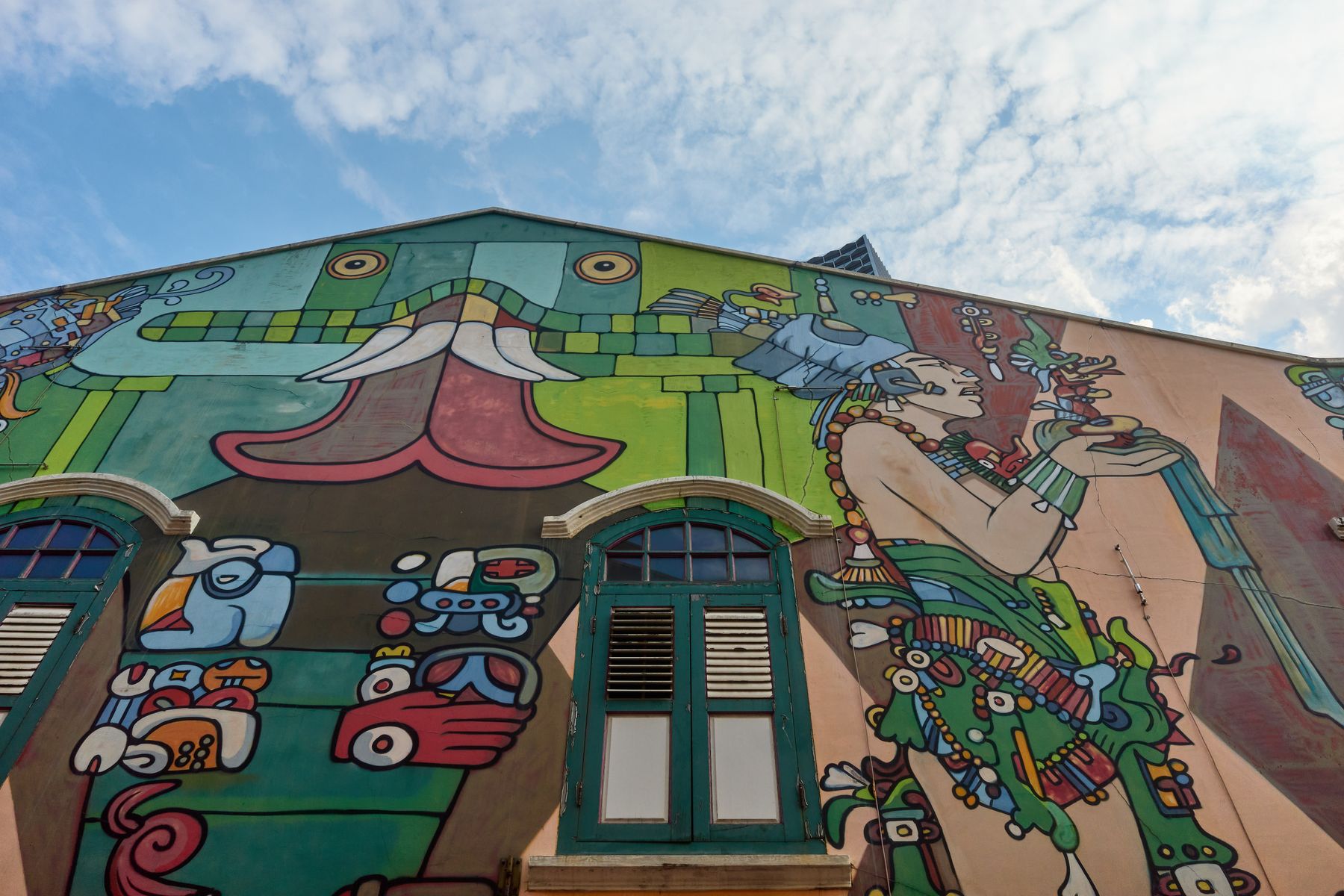
Public art can strengthen the identity of a historic building or site, but it also introduces a new layer of design, construction, maintenance, and preservation decisions.
A sculpture in a plaza, an artwork integrated into a landscape, a mural, a suspended installation, or a site-specific piece attached to a building can all change how people experience a historic place. The challenge is to make the new work legible as contemporary while avoiding unnecessary damage to the materials, features, spaces, and setting that already carry historic significance.
Start with the historic place, not the artwork
Before a public-art project fixes a location or installation concept, the team should understand what makes the building and site significant. That includes character-defining exterior features, important interior spaces, historic circulation patterns, views, landscape relationships, masonry or cladding materials, and areas that have already been altered.
Where the Secretary of the Interior's Standards for Rehabilitation govern or guide the work, Standards 9 and 10 provide a useful framework. New work should avoid destroying significant historic materials and should be compatible while remaining differentiated from the old. It should also be planned so future removal doesn't impair the essential form and integrity of the historic property.
Those principles don't require public art to imitate historic ornament. A contemporary work can be clearly new while still respecting the scale, material character, spatial hierarchy, and setting of the property. See character-defining features in historic preservation for a fuller explanation of the features that may need protection.
Public art and interpretation are not the same thing
Historic rehabilitation projects often include both public art and interpretive elements, but the two shouldn't be confused. Interpretive signage is primarily informational. It can explain the property's history, people, events, construction, former uses, or rehabilitation process. Public art may respond to those themes, but it can also introduce a new artistic perspective without functioning as a history lesson.
Freestanding, attached, and integrated art create different risks
A freestanding sculpture or installation may avoid attachment to historic fabric, but it can still affect setting, views, circulation, foundations, archeology, drainage, landscaping, security, and maintenance access. Artwork attached to a historic building introduces different questions. Anchors, brackets, embeds, penetrations, electrical feeds, and waterproofing details can permanently affect masonry, stone, terra cotta, wood, or metal.
Where feasible, installation methods should minimize irreversible loss of significant material and avoid concentrated loads or penetrations where the historic assembly can't support them safely. Historic fabric explains why surviving materials need to be understood before they are modified.
Murals on historic masonry need more than an artistic review
A mural can look like the simplest kind of public art because it doesn't require a foundation or large structural frame. On historic masonry, however, the substrate matters. Inappropriate coatings can change appearance and moisture behavior, while nonpermeable coatings can trap moisture and be difficult to remove without damaging the surface.
A mural proposed directly on historic brick, stone, concrete, stucco, or terra cotta should be evaluated as a material treatment, not only as a graphic-design decision. The team should understand whether the surface is historically significant, whether it was historically painted, what coating system is proposed, how it will weather, whether the wall can continue to dry, and what future treatment would require. Historic facade restoration covers the coordinated investigation and repair of exterior systems.
Structure, wind, seismic loads, and temporary conditions matter
Public art can become a structural scope. Large sculptures, suspended installations, overhead elements, wall-mounted pieces, screens, banners, and illuminated works may need engineered foundations, connections, frames, reinforcing, or support from the building structure. Exterior work also has to account for wind, weather, corrosion, water entry, and, where applicable, seismic demand.
Installation planning matters too. A heavy artwork may require cranes, lifts, rigging, temporary bracing, street closures, roof access, or protection of historic paving and finishes. The best attachment detail can still fail as a project strategy if there is no practical way to install or maintain it without damaging the property.
Accessibility and circulation should be checked before the art is fixed
Public art occupies space that people also use. Artwork in lobbies, corridors, plazas, courtyards, sidewalks, and other circulation areas has to be coordinated with accessible routes, required clear widths, headroom, doors, egress, queuing, and visibility. Wall-mounted objects with leading edges above the cane-detectable zone and below required headroom can create particular projection issues.
That doesn't mean art must be pushed out of circulation areas. It means the placement, base, guard, pedestal, projection, and clearances should be reviewed before fabrication, not after the artist arrives for installation. See ADA for historic buildings for the broader challenge of providing access without erasing historic character.
Bring the artist into the project team early enough to matter
Site-specific public art works best when the artist understands the project before the final location and support conditions are locked. The artist may need input from the architect, landscape architect, preservation consultant, structural engineer, electrical engineer, lighting designer, civil engineer, fabricator, conservator, and contractor. The design team also needs timely information about weight, dimensions, connections, power, lighting, finish, maintenance access, tolerances, drainage, and installation sequence.
If either side waits too long, the project can end up redesigning foundations, walls, utilities, landscape work, or structural support around an artwork that was treated as a late add-on. Adaptive reuse architects explains the multi-disciplinary coordination that complex reuse projects require.
Maintenance belongs in the design discussion
Public art doesn't stop being a project when the ribbon is cut. Outdoor and publicly accessible artwork is exposed to weather, ultraviolet light, dirt, vandalism, accidental impact, landscape irrigation, deicing salts, birds, corrosion, and routine building maintenance. Interior work can face cleaning, touching, humidity, sunlight, or conflicts with future tenant improvements.
Owners should understand who owns the artwork, who is responsible for maintenance, what cleaning products and methods are allowed, whether replacement parts or coatings are available, how access will be provided, and when a professional conservator should be involved. An art installation that leaks, corrodes, stains masonry, traps debris, or blocks access to a facade can create building deterioration even if the artwork itself remains intact.
Preservation review depends on the project
Not every artwork at a historic building goes through the same review. A locally designated property may require approval from a preservation commission. A project using federal historic rehabilitation tax credits is reviewed under the Standards for Rehabilitation. A federal or federally assisted undertaking that may affect historic properties can require Section 106 review. Building permits, zoning, sign ordinances, right-of-way approvals, accessibility requirements, electrical permits, and structural review may also apply.
Those processes have different legal authority and shouldn't be collapsed into one generic historic approval. Public art can affect setting, views, landscape features, circulation, and archeological resources, so it is important to identify approvals early. What Section 106 can signal about upcoming historic preservation work explains the federal-review context.
Public art creates its own design and construction scopes
For firms working in historic preservation and adaptive reuse, a public-art component can generate work beyond the artist's commission. Depending on the installation, the project may require structural engineering, foundations, steel or aluminum fabrication, architectural detailing, masonry work, electrical service, lighting controls, waterproofing, site work, landscape coordination, rigging, specialty coatings, conservation, signage, security, testing, and long-term maintenance planning.
Public-sector art programs can also surface early. Board approvals, capital budgets, artist calls, percent-for-art allocations, design-team contracts, public meetings, and site-improvement packages may reveal that a rehabilitation project is advancing before the main construction opportunity is advertised. Adaptive reuse projects are often where these public-facing reuse strategies come together.
The practical takeaway
Public art can add a meaningful contemporary layer to a historic building or site without pretending to be historic and without treating the existing place as a blank canvas. The strongest approach is coordinated: understand the property's significance, define the role of the art, choose a location and installation method that respect historic fabric and circulation, engineer the support and attachments, plan for approvals and installation, and decide how the artwork will be maintained over time.
For historic buildings, the art and the place should both remain legible.