
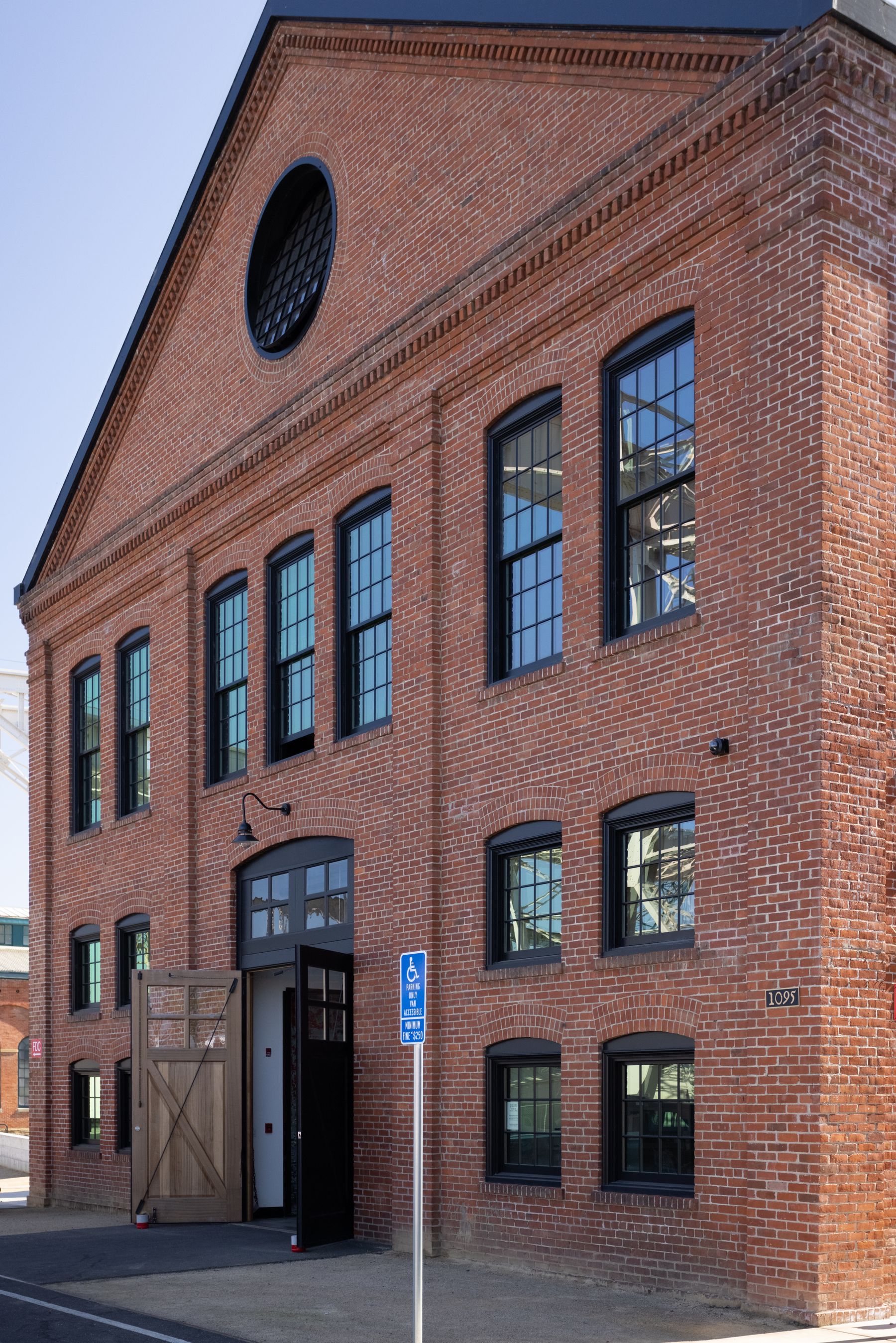
An adaptive reuse design charrette is a focused working session that brings the owner, designers, technical specialists, and other key decision-makers together early enough to influence the project.
For existing buildings, that timing matters. The proposed use may conflict with the structural grid. A code solution may affect a character-defining stair. Mechanical equipment may need space that the architectural concept has already claimed. An envelope improvement may change moisture behavior. A sustainability target may depend on roof area, utility capacity, or material choices another discipline is treating as fixed.
A charrette gives the team a structured way to put those interdependent questions on the table before they become separate design problems and expensive redesign. It is not a substitute for investigation, engineering, preservation review, or later design development. It is a way to make better early decisions about what needs study, what the project should prioritize, and which constraints must be resolved together.
What is an adaptive reuse design charrette?
The Whole Building Design Guide defines an integrated design charrette as an intensive workshop that brings stakeholders and experts together to address a design issue. Charrettes range from focused project meetings to multi-day sessions, but the common feature is concentrated, multidisciplinary problem-solving.
For adaptive reuse, the purpose should be more specific than general brainstorming. The team should enter with real project information and leave with clearer decisions, investigations, responsibilities, and next steps. That makes the charrette most useful when the project has enough information to identify major constraints but still enough flexibility to change course.
Why existing buildings benefit from early integration
Adaptive reuse concentrates decisions that new construction can often separate more easily. The team inherits a structural system, floor-to-floor heights, walls, openings, foundations, stairs, roofs, utilities, existing materials, previous alterations, and sometimes decades of incomplete documentation. The new use adds egress, accessibility, fire protection, ventilation, plumbing, acoustics, energy performance, daylight, loading, technology, and sometimes tax-credit or local preservation review requirements.
A charrette creates a place for those requirements to be considered together rather than sequentially. Adaptive reuse architects explains how the project team comes together around those connected questions.
Do the investigation before the workshop
A charrette is only as useful as the information brought into it. The team does not need every answer, but it should know which answers are missing. Useful pre-charrette information can include measured drawings, existing-condition photographs, structural observations, code and zoning summaries, preservation documentation, hazardous-material information, utility capacity, roof and envelope findings, proposed program, owner priorities, preliminary budget, and known schedule constraints.
Where the project depends on a critical unknown, targeted investigation can be more valuable than another conceptual sketch. The point is not to eliminate uncertainty. Existing buildings never become completely knowable at the concept stage. The point is to distinguish facts, assumptions, and unresolved conditions so decisions are not made as if all three are the same. Adaptive reuse due diligence explains why those early findings matter.
Put the people who can change the answer in the room
A charrette works best when participants represent the decisions the project actually has to make. That usually includes the owner or an empowered owner representative, architect, preservation architect or consultant where appropriate, structural engineer, mechanical and electrical engineers, civil or landscape team where site work matters, and specialists tied to the project’s main risks.
Depending on the building, that may include a code consultant, envelope consultant, sustainability consultant, fire-protection engineer, commissioning provider, hazardous-material specialist, cost estimator, facility operator, contractor or construction manager, and key specialty trades. Operations staff are especially useful when a design must be maintained, accessed, controlled, cleaned, or operated efficiently after construction.
Use the charrette to solve interfaces, not isolated disciplines
The highest-value questions often sit between disciplines. A structural reinforcement may preserve an existing frame but reduce space for ductwork. More glazing may improve daylight but increase cooling loads and affect a historic elevation. A new accessible entrance may change site grading, drainage, historic fabric, and circulation at the same time. These are not problems one consultant can solve alone.
The charrette should test whole-project strategies rather than ask each discipline to present its preferred solution. For historic buildings, preservation should be part of that systems thinking. The question is not how to protect historic fabric after a technical solution has been selected. It is how the technical solution can be shaped around the building’s significance from the beginning. Start by identifying character-defining features.
A useful charrette should force real decisions
Good charrettes are structured around decisions, tradeoffs, and open questions. Instead of asking how a project can be sustainable, ask whether the roof should prioritize photovoltaic capacity, historic roof form, mechanical equipment, daylight, or some combination, and what each option does to cost and performance. Instead of asking whether an old building can become housing, test the actual floor plate, egress, window spacing, plumbing distribution, accessibility, fire separation, and unit layouts.
A practical agenda moves from project goals and known constraints into focused breakout topics, then returns to a full-team discussion where conflicts are resolved or assigned for follow-up. The agenda should be tailored to the project, not copied as a certification ritual.
Document assumptions, not just conclusions
The most useful deliverable is not a wall covered in sketches. It is a record of what the team decided and why. Capture key decisions, alternatives that remain open, assumptions that need verification, required investigations, code or preservation questions, cost or schedule impacts, responsible parties, and due dates.
A decision log is particularly useful because later discoveries can invalidate an assumption. This prevents the charrette from becoming a one-time event disconnected from the project as design becomes more detailed.
Charrettes can improve project delivery, but they do not replace it
Early collaboration is easier when the project delivery method allows the right construction expertise to participate. Under design-bid-build, the eventual contractor may not yet be selected. The owner can still involve cost estimators, construction advisers, specialty consultants, or an agency construction manager. Under CMAR, progressive design-build, design-build, or other approaches with earlier constructor involvement, the builder may contribute directly to logistics, phasing, temporary works, procurement, access, sequencing, and specialty-trade availability.
That does not make one method universally superior. The charrette should reflect who is under contract, what advice the owner can obtain, and which decisions benefit from construction input. See project delivery methods for historic preservation.
Where adaptive reuse charrettes go wrong
A charrette can waste time if it is scheduled without a clear purpose. Common problems include inviting people who cannot make decisions, starting before the team has basic building information, spending the session on presentations instead of working issues, trying to solve every detail, failing to identify tradeoffs, and leaving without assigned actions.
Another failure is treating consensus as the goal. Some conflicts cannot be resolved by making everyone equally happy. The owner may need to choose between cost, schedule, program, performance, and preservation objectives after hearing the consequences of each option.
An adaptive reuse design charrette can be an early project signal
For firms pursuing adaptive reuse projects, a charrette can appear well before a construction solicitation. An owner may first procure feasibility, programming, sustainability consulting, preservation planning, architecture, engineering, code analysis, or facilitation services. Public meeting records, board approvals, design contracts, grant scopes, redevelopment studies, and consultant solicitations can show that an owner is moving from a general idea toward an integrated project concept.
Preserve Signal tracks those early planning, design, funding, and procurement signals so firms can identify developing projects before a formal construction bid is the first time they hear about them.
The practical takeaway
A design charrette is most valuable when an adaptive reuse project has multiple interdependent constraints and the team still has time to act on what it learns. Bring the right people together. Give them real information. Focus on decisions that cross disciplines. Identify what is known, what is assumed, and what still needs investigation. Then document the decisions and carry them into the next phase.