
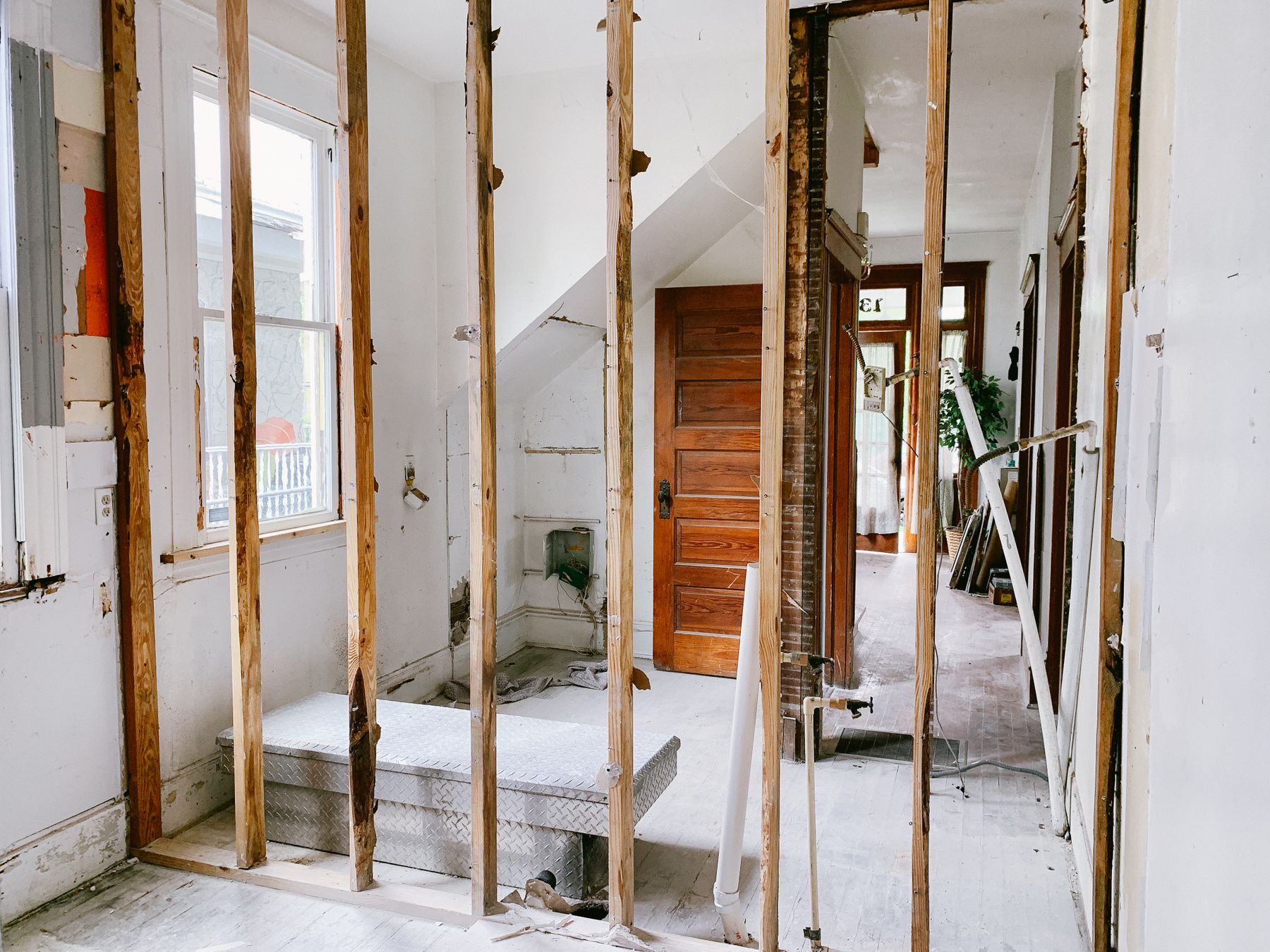
Historic building material reuse is rarely a simple yes-or-no decision. A rehabilitation project may contain original materials that should remain in place, serviceable components that can be moved and reused elsewhere, missing features that need to be recreated from evidence, and deteriorated materials that genuinely need replacement.
The useful question is not, “Can we save everything?” It is, “What is significant, what is still serviceable, what can be safely reused, and what does the new use require?” Material condition, code, structural capacity, hazardous constituents, weather exposure, compatibility, workmanship, available quantities, storage, sequencing, and cost can all affect whether reuse is practical.
Retain: keep useful historic material where it is
Retention is the starting point when a significant historic material or feature is still capable of serving its function with repair. Under the Secretary of the Interior’s Standards for Rehabilitation, distinctive historic materials and features should be preserved, and deteriorated historic features should be repaired rather than replaced when repair is feasible.
Retention can mean repairing timber rather than replacing the member, repointing sound masonry rather than rebuilding a wall, patching historic plaster, repairing windows, reusing serviceable roof tile, retaining flooring, or preserving structural framing while strengthening only the areas that require intervention. Historic building restoration explains how that evidence-based repair process is scoped and carried through construction.
Retention is not the same as doing nothing. Existing material may need cleaning, consolidation, splicing, dutchman repairs, reinforcement, new fasteners, protective coatings, improved drainage, or other work to remain serviceable. The team must also understand why the material failed before preserving the same failure conditions.
Repurpose: reuse existing material in a new location or function
Some materials are worth keeping even when they cannot remain exactly where they were. Repurposing can include salvaging timber for new interior work, reinstalling historic brick in a repaired area, relocating serviceable doors, reusing stone, preserving industrial artifacts within a new program, or incorporating sound flooring, hardware, millwork, fixtures, or metalwork elsewhere in the project.
EPA guidance treats preservation of existing structures and salvage of usable materials as source reduction and reuse. That is different from recycling, which generally requires a material to be processed into a new feedstock or product. Moving an original element can change its historical meaning, so document its origin, condition, finish, attachment, and relationship to surrounding work. Historic fabric offers useful context for distinguishing surviving material from the significance it may carry.
Recreate: reproduce a missing or unsalvageable feature when the evidence supports it
Recreation is different from reuse because the physical material itself is new. A project may need to reproduce a missing door, molding profile, window component, flooring pattern, metal detail, masonry unit, or other feature when no serviceable original remains. Surviving examples, historic photographs, drawings, specifications, physical evidence, or measured fragments can provide the basis for new work. This is a project-level reproduction decision, not the formal treatment called Reconstruction under the Secretary of the Interior’s Standards.
Replace: know when reuse has reached its limit
Historic building material reuse should not become an argument for keeping material that is unsafe, unsound, or no longer capable of performing its required function. Replacement may be justified when deterioration is too extensive for durable repair, when too little material survives to perform as an assembly, when life-safety requirements cannot reasonably be met through retention, or when reuse would create a technical incompatibility that threatens surrounding historic fabric.
For distinctive historic features, the Standards for Rehabilitation generally favor matching the old in design, color, texture, and, where possible, materials. Substitute materials may be appropriate when original materials are not reasonably possible and the replacement is visually and physically compatible. The decision should account for the feature’s significance, visibility, weathering, physical properties, and relationship to character-defining features.
Material reuse starts with an inventory, not a demolition plan
If reuse matters to the project, identify candidate materials before selective demolition begins. A useful inventory records what the material is, where it is located, why it matters, its condition, approximate quantity, dimensions, attachments, finish, probable reuse location, and any testing or treatment required. It should distinguish historic significance from salvage value.
Existing-condition investigation matters because salvage quantities can change quickly once work is opened. Hidden decay, broken fasteners, embedded corrosion, previous patches, inaccessible connections, or removal damage can reduce the material actually available for reuse. That uncertainty should appear in the design and cost plan. Adaptive reuse due diligence explains why these conditions need attention before a scope is fixed.
Structural materials require engineering, not just salvage judgment
Heavy timber, brick, stone, steel, and other structural materials can be strong candidates for retention or reuse, but appearance alone does not establish capacity. When a reused material will carry structural load, the engineer and authority having jurisdiction may require investigation, testing, calculations, or other project-specific evidence. These issues are especially familiar in adaptive reuse of factories.
Hazardous materials, storage, and handling can change the plan
Older materials may contain lead-based paint, asbestos, PCBs, mercury, or other regulated or hazardous constituents. A material can be historically valuable and still require controlled handling. EPA’s RRP Rule does not categorically prohibit salvage of components with lead-based paint, but qualifying work may trigger RRP requirements. Suspect asbestos-containing materials that will be disturbed should be addressed by qualified professionals before a reuse plan assumes they can be removed and salvaged.
Material reuse is also a logistics problem. Doors stored flat in a damp container can warp, flooring can cup or split, brick can be damaged by careless cleaning, and hardware can disappear without tagging. Construction documents should identify who owns salvaged material, who removes it, how it will be cleaned, labeled, protected, stored, inspected, and accepted for reuse, and what happens if recovered quantities differ from the estimate.
Reuse can reduce waste and new material demand, but it is not automatically simpler
Preserving existing structures and salvaging usable materials can reduce disposal and avoid some demand for virgin materials and new manufacturing. Those benefits are real, but material reuse can add labor, testing, careful dismantling, cleaning, storage, documentation, and coordination. The strongest reuse strategy is selective and documented rather than ideological.
Historic building material reuse creates specialized scopes of work
Material reuse can generate work well before the main construction package: historic structure reports, building assessments, salvage inventories, hazardous-material surveys, structural investigations, selective demolition, deconstruction plans, mockups, material testing, conservation specifications, custom fabrication, storage plans, and specialty repair scopes.
That early activity can be a meaningful signal that a preservation or adaptive reuse project is moving from concept toward executable scope. Preserve Signal tracks those studies, design decisions, funding actions, and procurement signals so firms can identify developing opportunities before a formal construction solicitation is the first time they hear about them.